
I can’t remember the exact circumstances of Holoship. There was a grant involved, and we (“we” being Seeper) were already involved in Microsoft’s Hololens Academy program, trying to bring various AR experiences to the attractions industry.
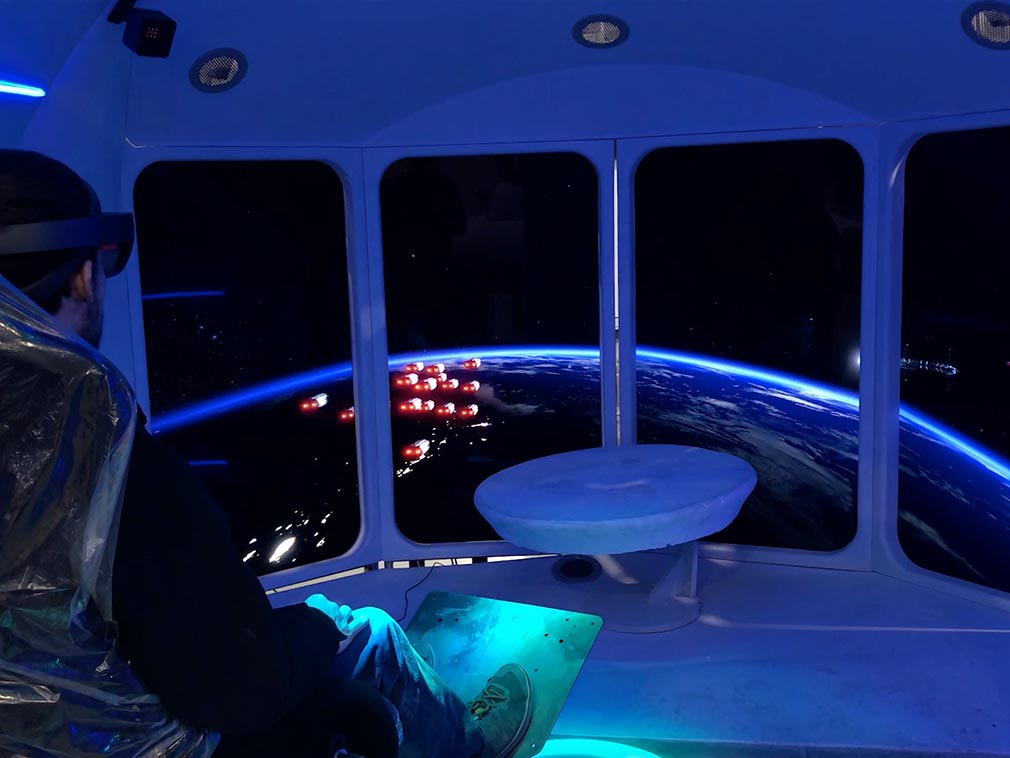
The Holoship was an attempt to create a more traditional flight simulator, but using the features of Augmented Reality to further enhance the experience in a way that – hopefully – contained a certain amount of consistent logic (the Hololens itself forming part of the general “space gear”.)
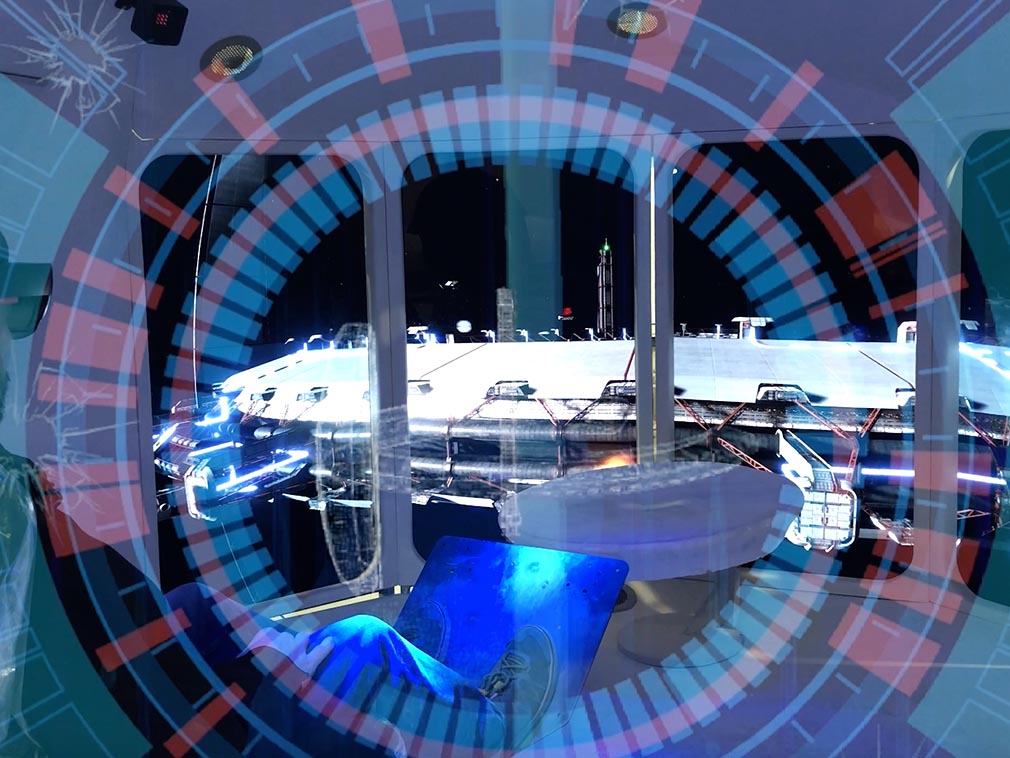
The conceit of the experience is that the visitors were part of the first commercial flight program in the not-too-distant-future. For reasons of expediency, they occupied two-person pods that were linked together into a kind of space flotilla, headed for a specially built commercial space station.
Of course, stuff was gonna go wrong.
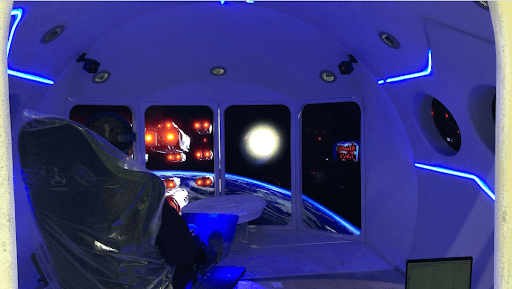
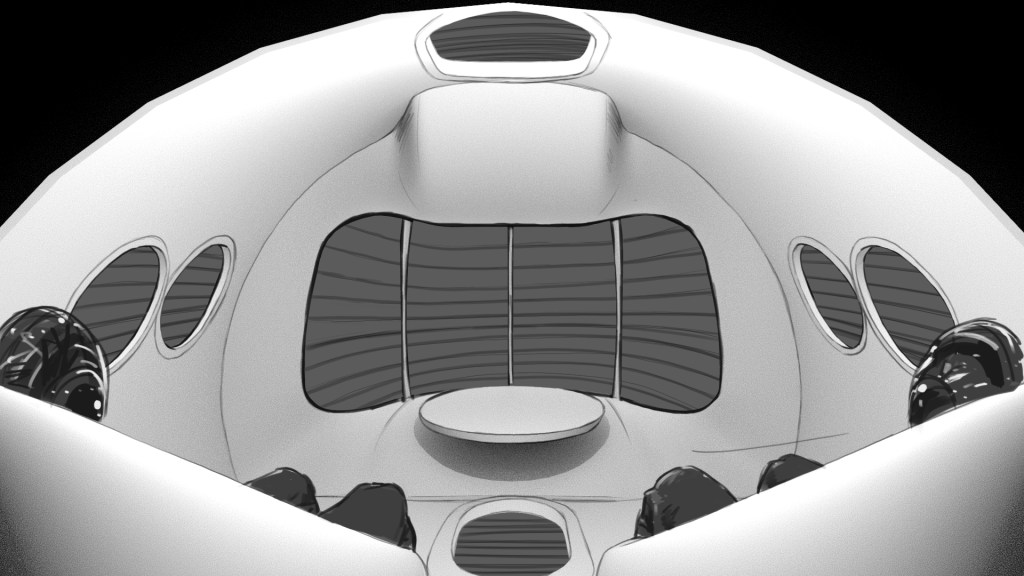
I created a narrative for all of this, and set of storyboards. My aim was to keep things simple, more prosaic, and add in disaster-movie type hazards, calling on the passengers to intervene and take control in order to survive, with a free-roaming holographic AI avatar for prompts, warning and general “what the hell’s going on?”
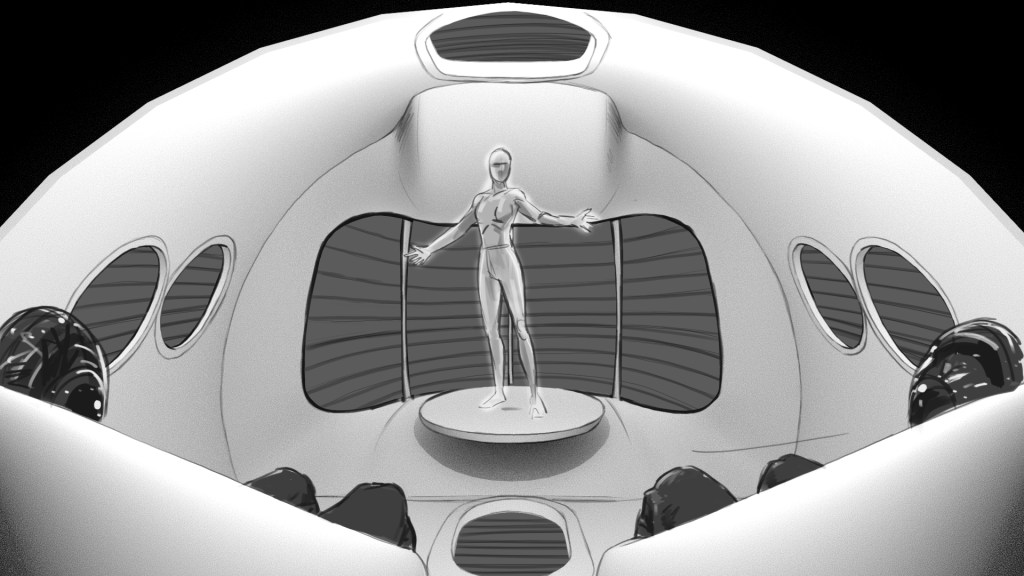
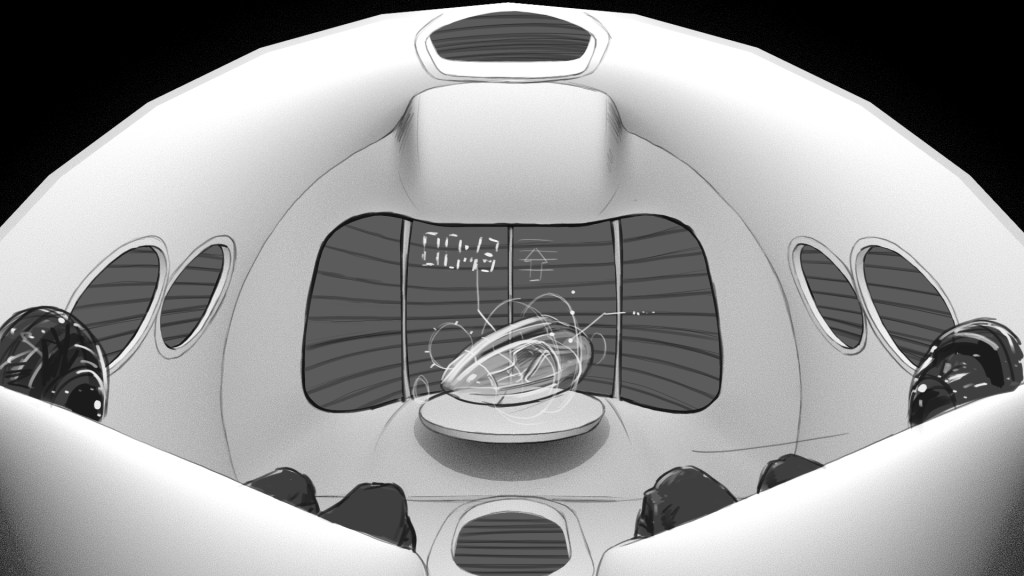
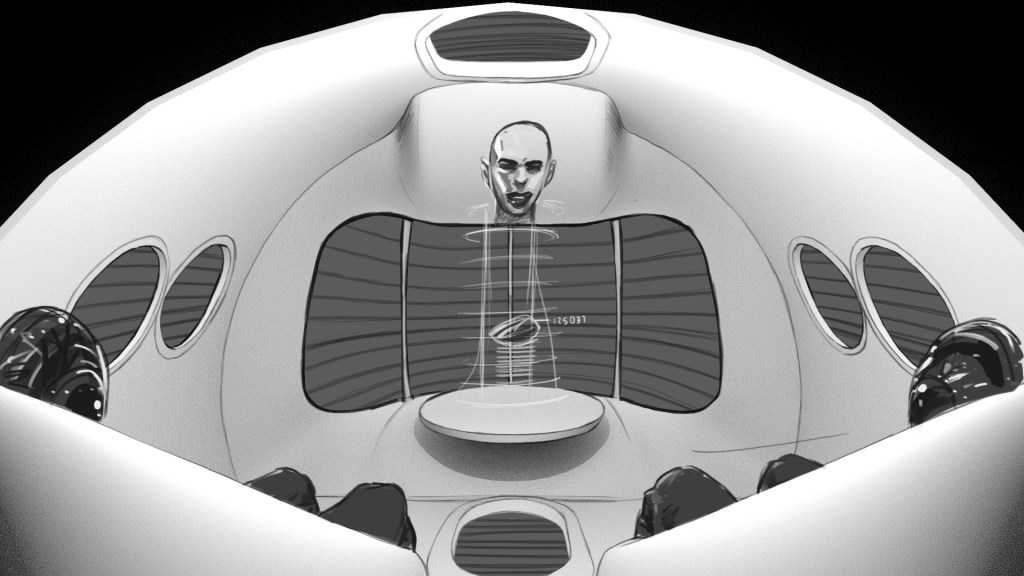

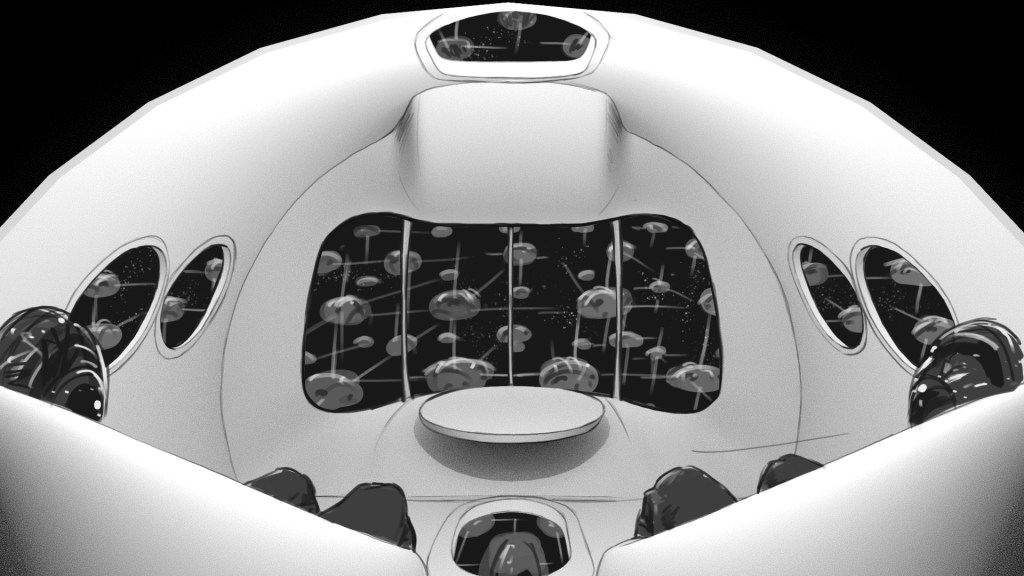
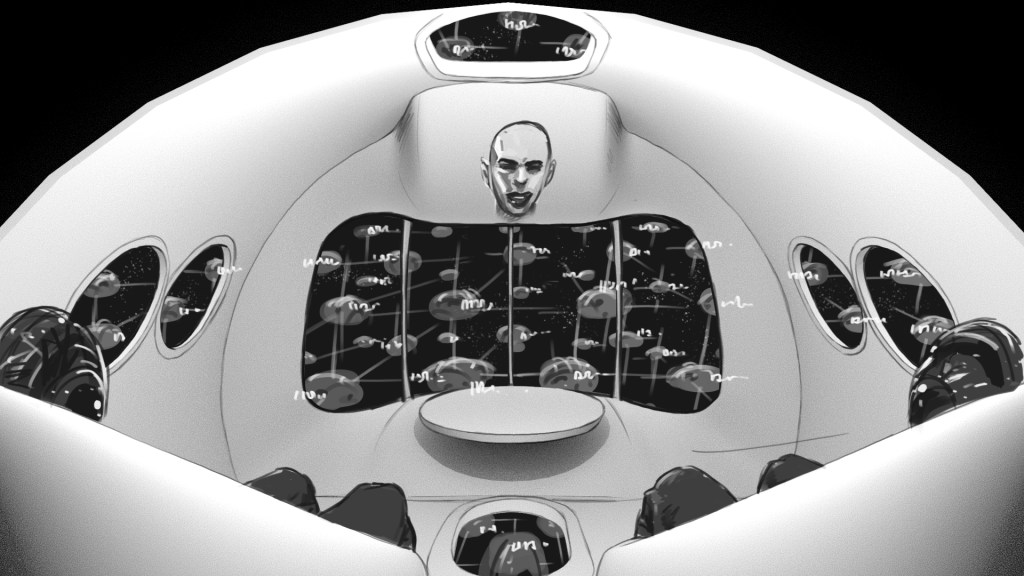
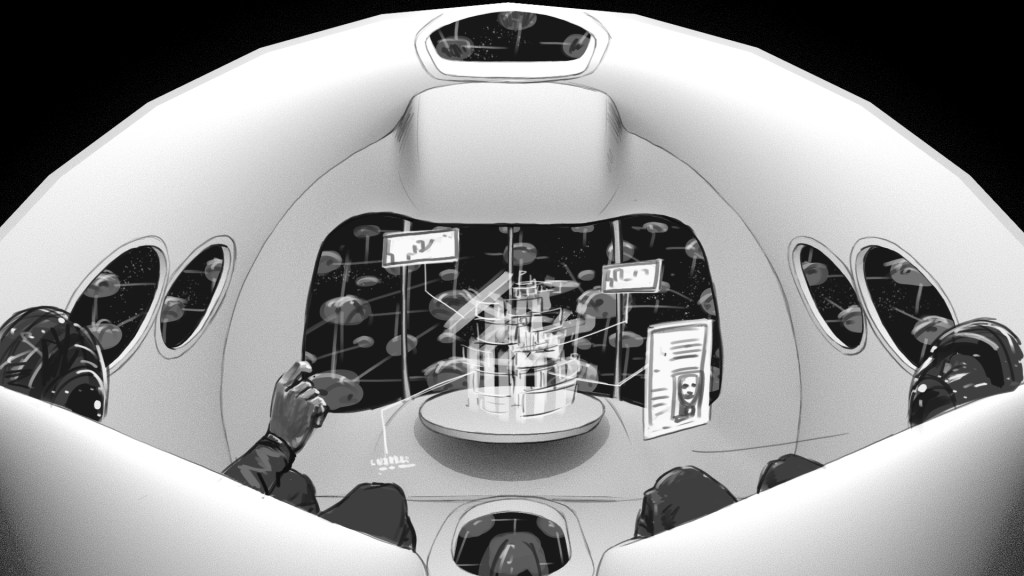
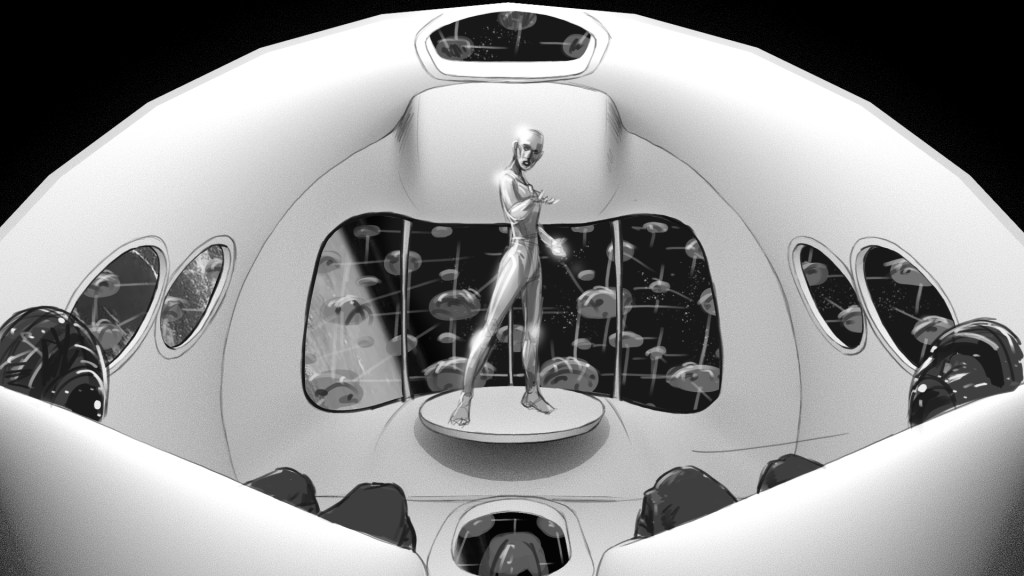
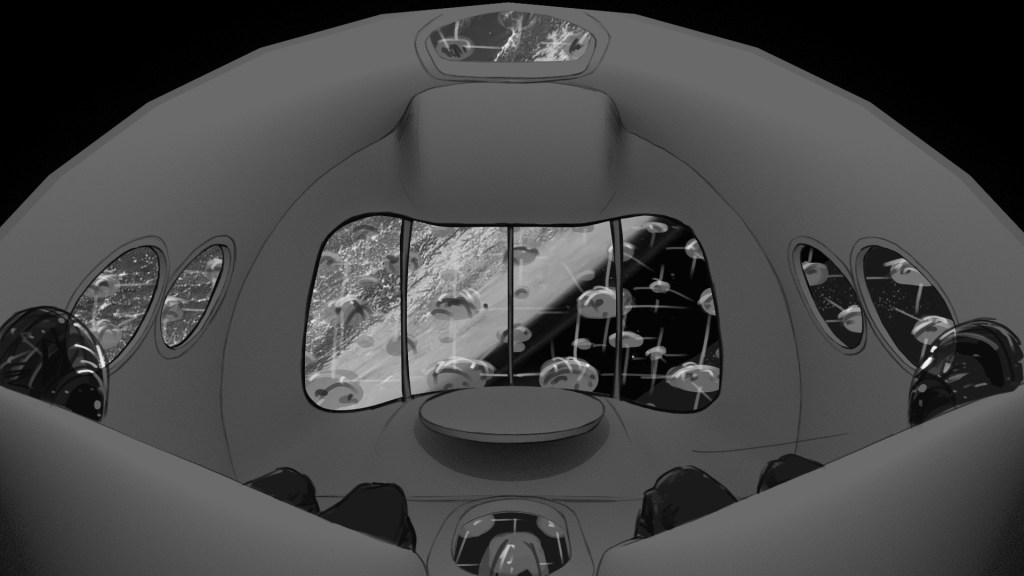
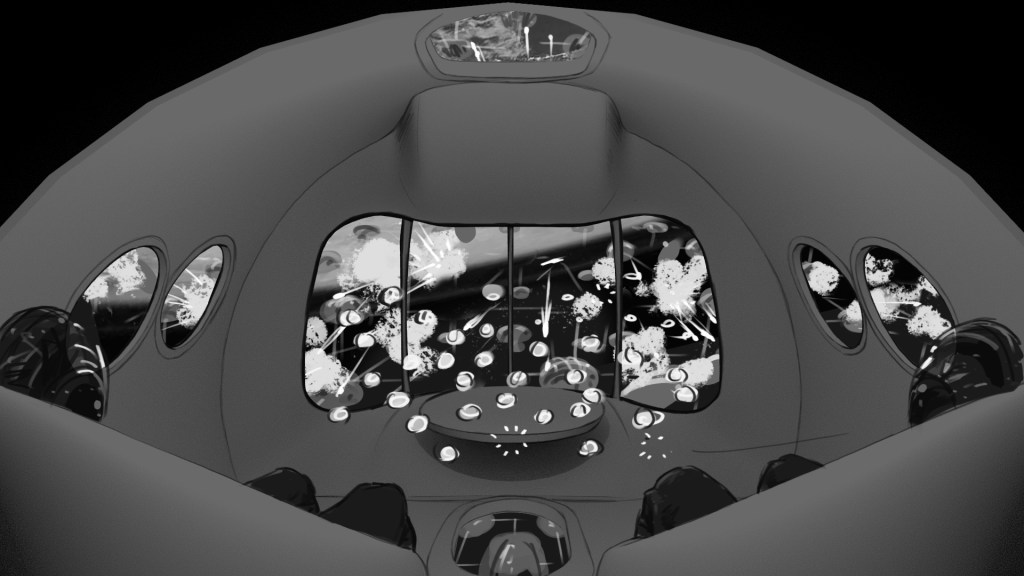
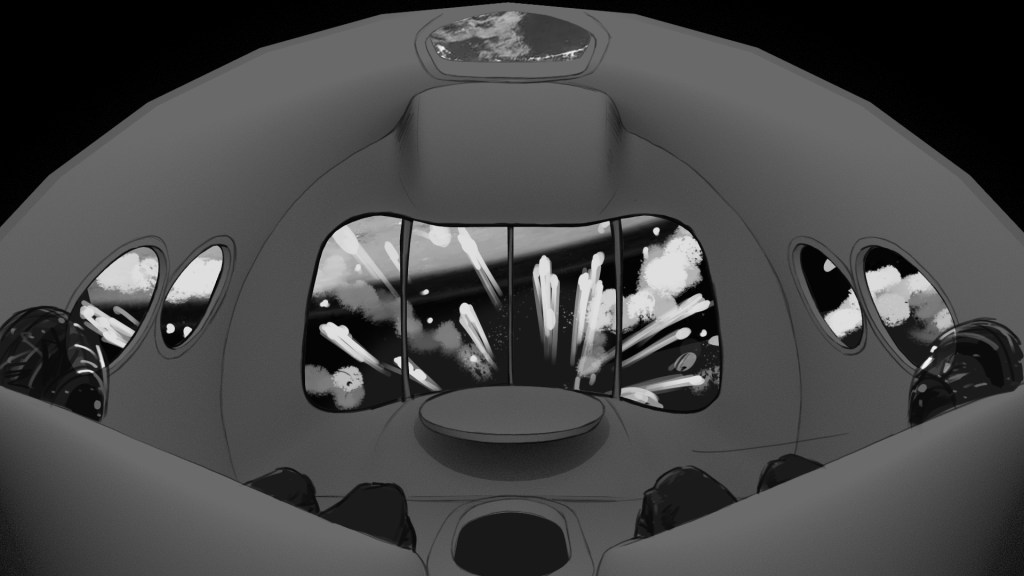
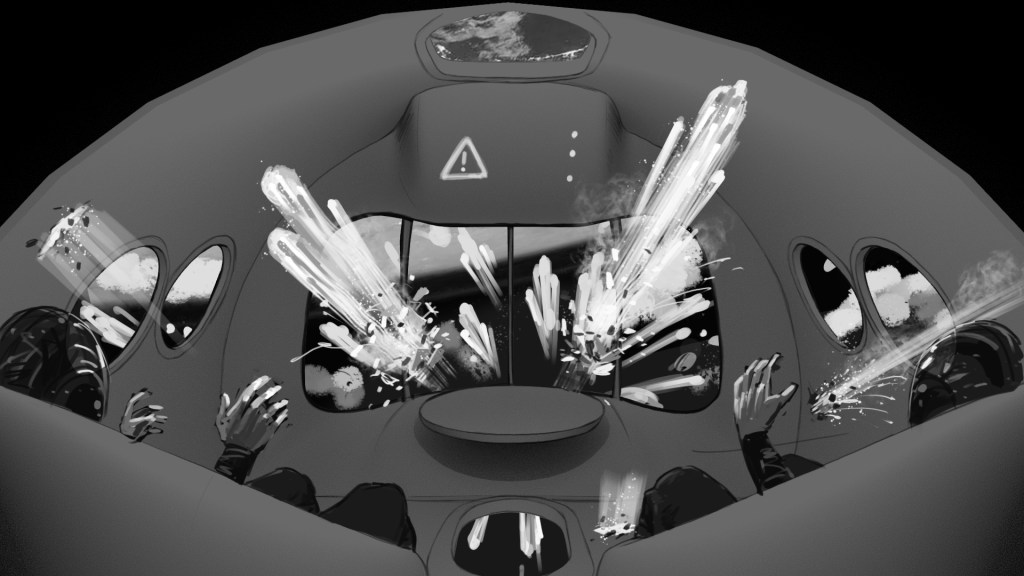
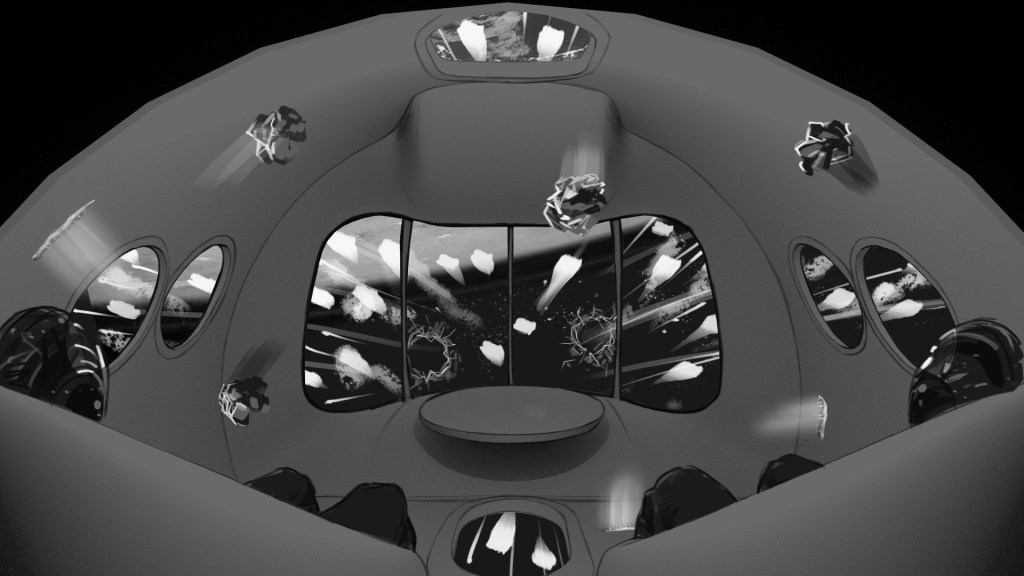
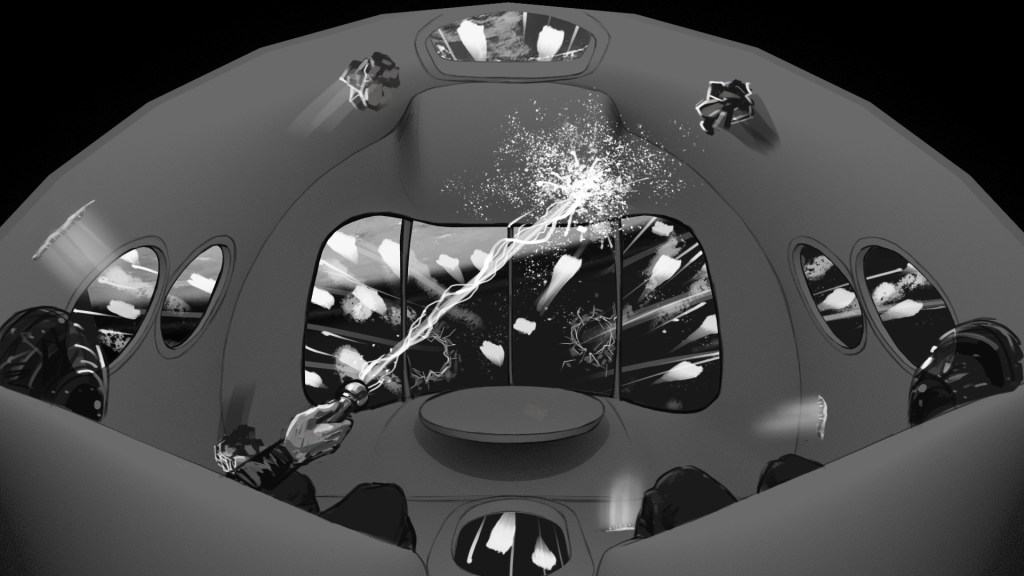
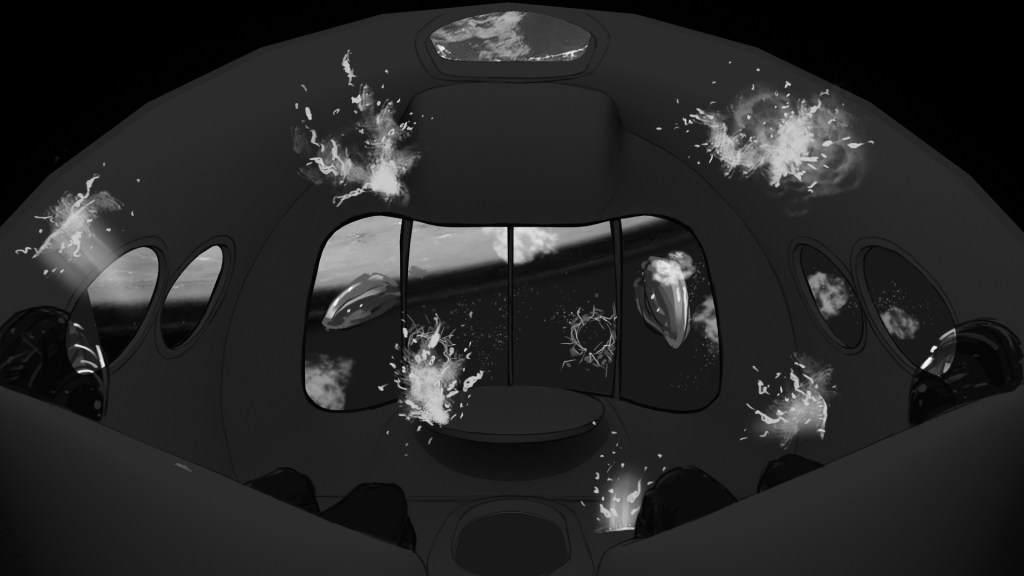
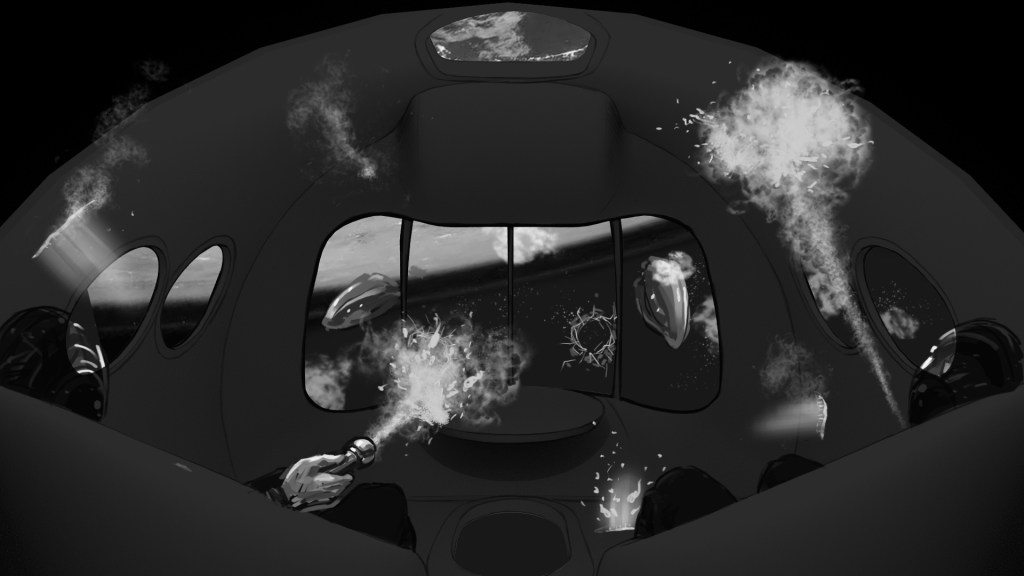
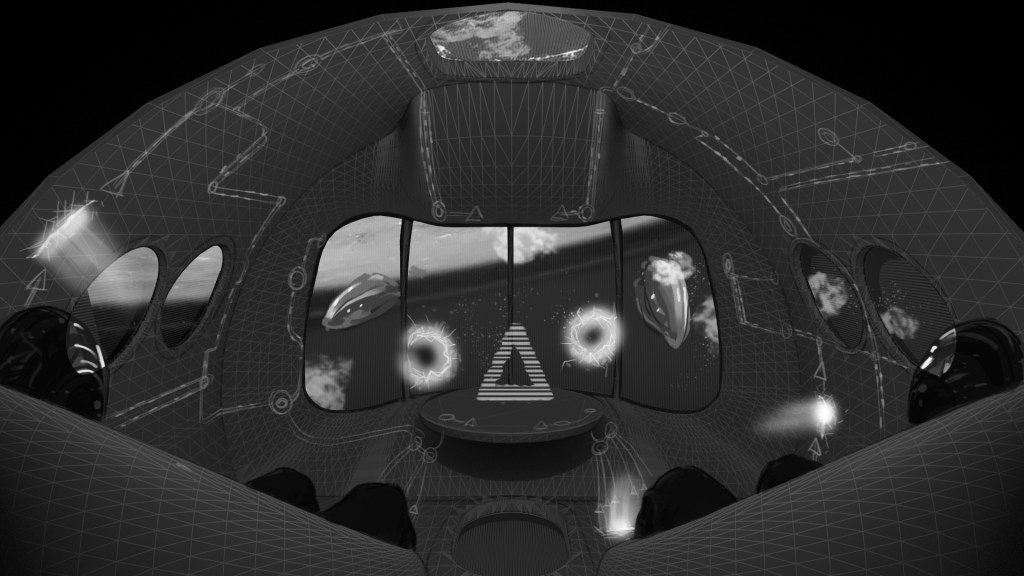
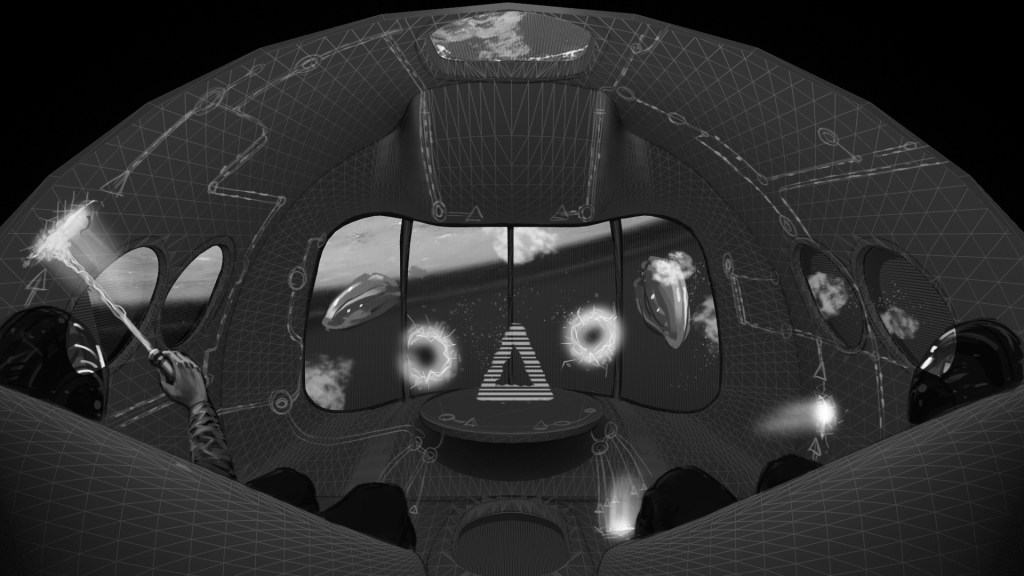
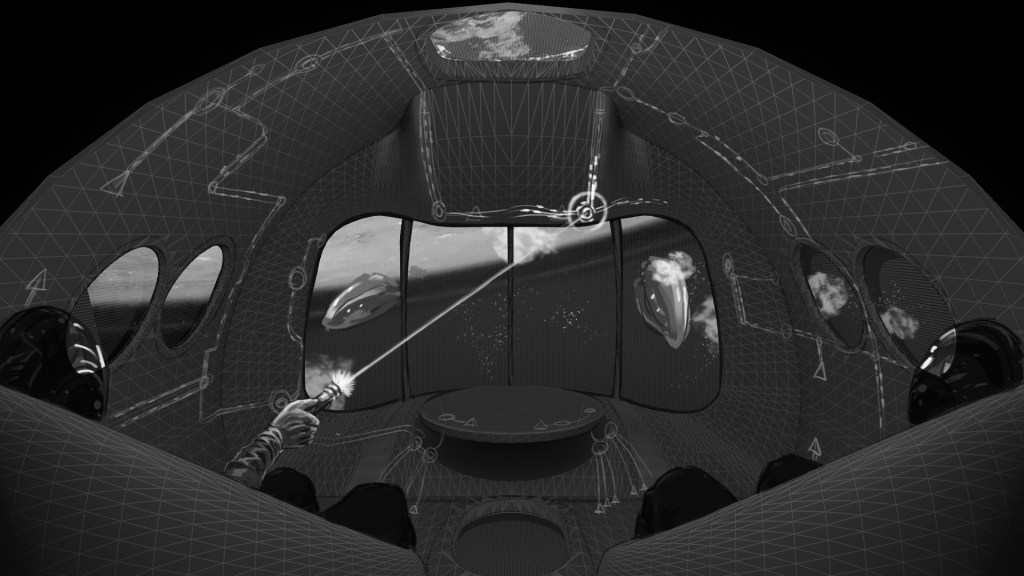
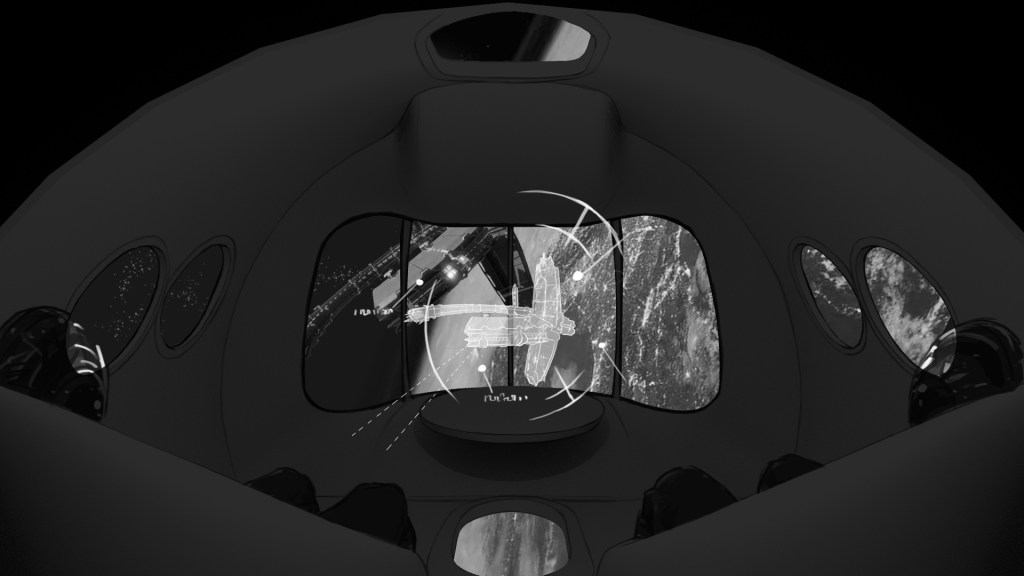
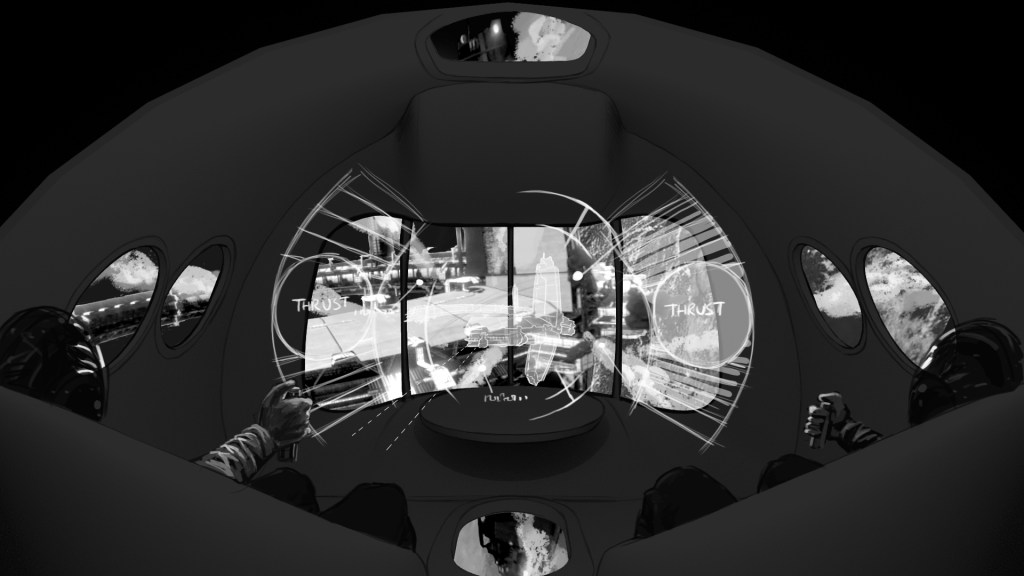
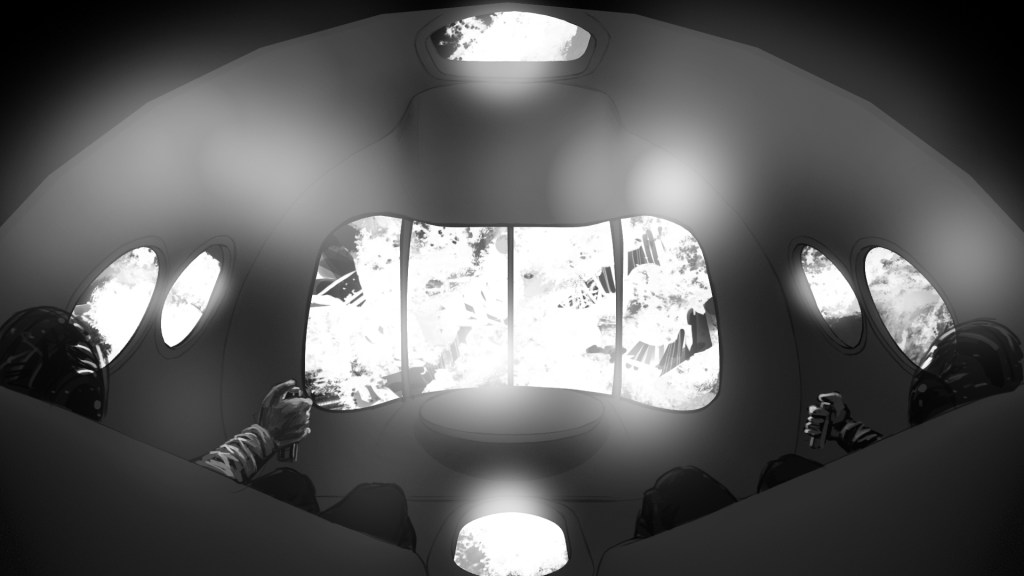
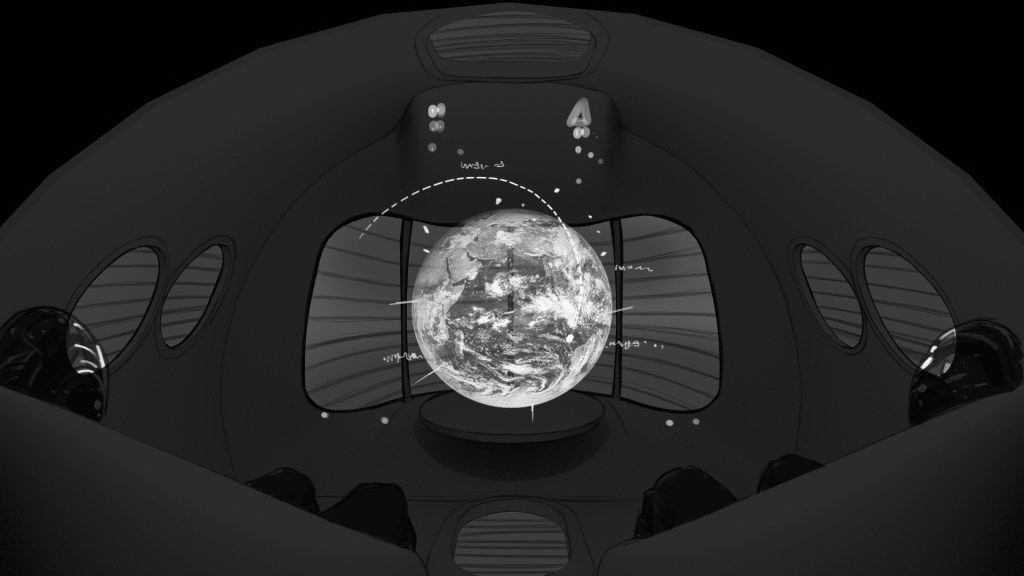
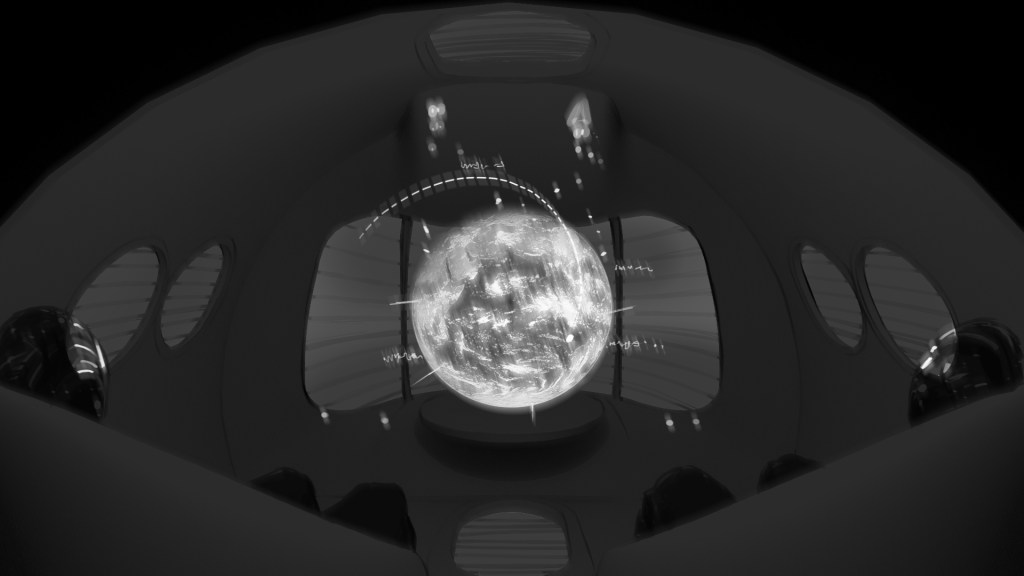
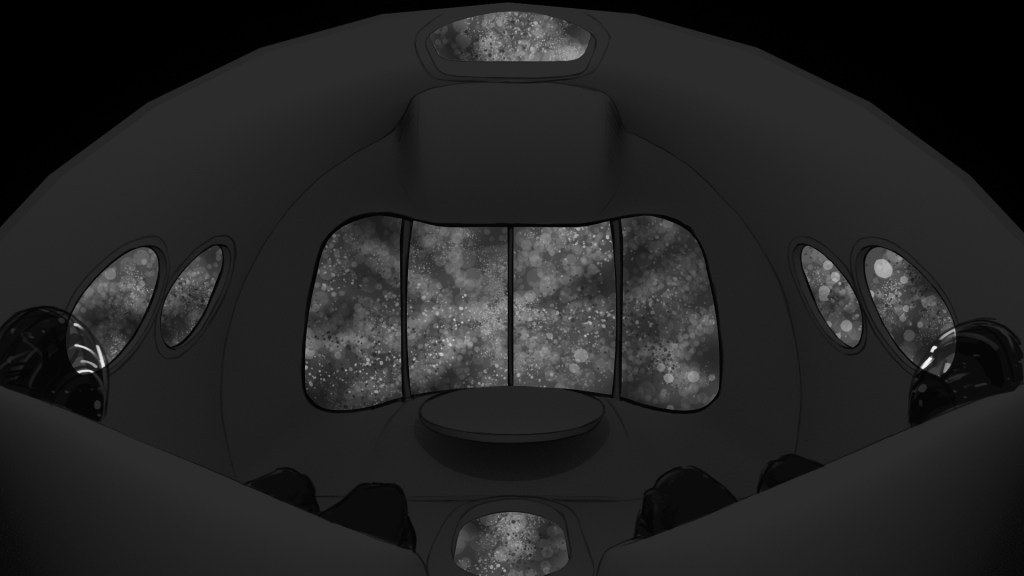
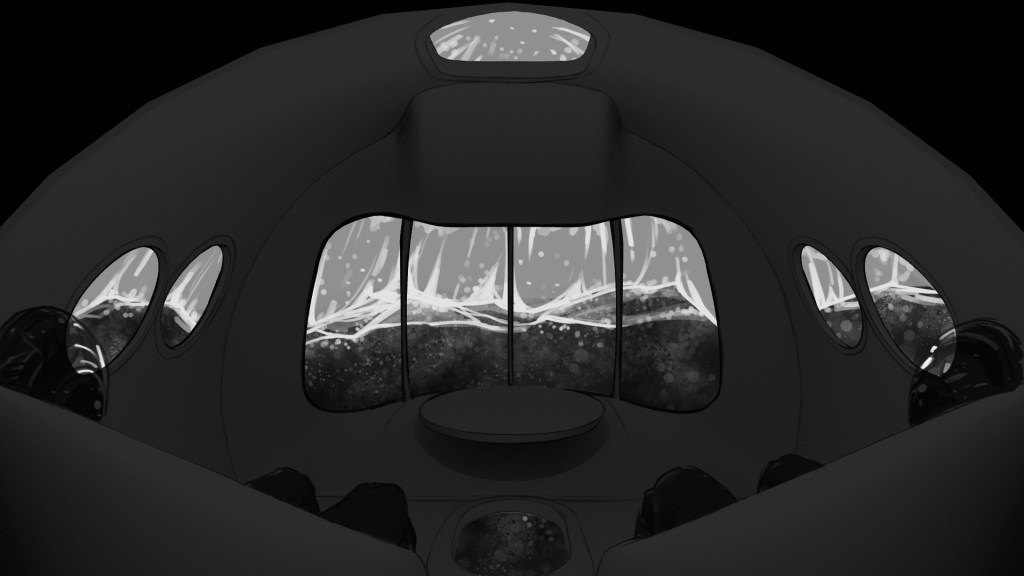
Opinion was divided on the narrative; Edge Case Games, who provided the space and craft content, using their Fractured Space assets, wanted to do more of what they were already doing; others wanted fantastic planets and water worlds, etc. Nice ideas, and certainly exciting as updated content, but the budget was tight.

The craft functioned like any flight-sim; content was shown on a number of screens, themed to appear as windscreens/ portholes (or whatever they have on spaceships), and then additional content was overlaid via the Hololens allowing for features such as the holo-table control system, and the addition of space debris punching into the interior, etc. The whole thing was initially meant to be mounted on a moving platform for the motion feedback but this proved impractical and caused issues with the Hololens tethering, so motion-feedback gamers chairs were used.
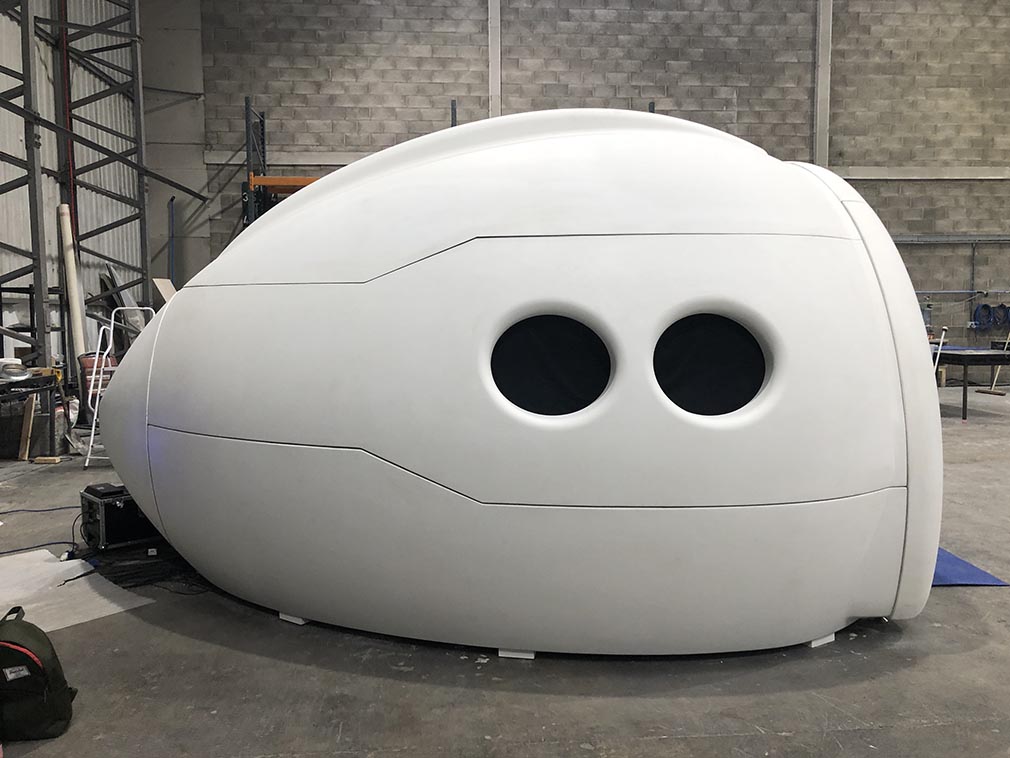
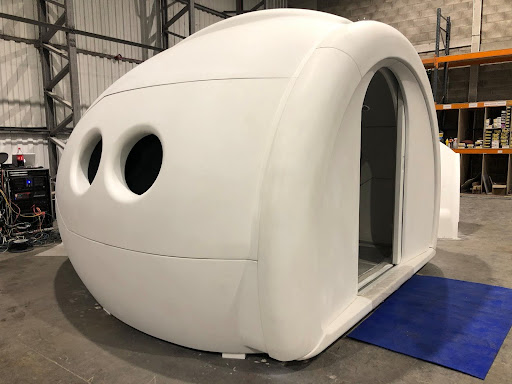
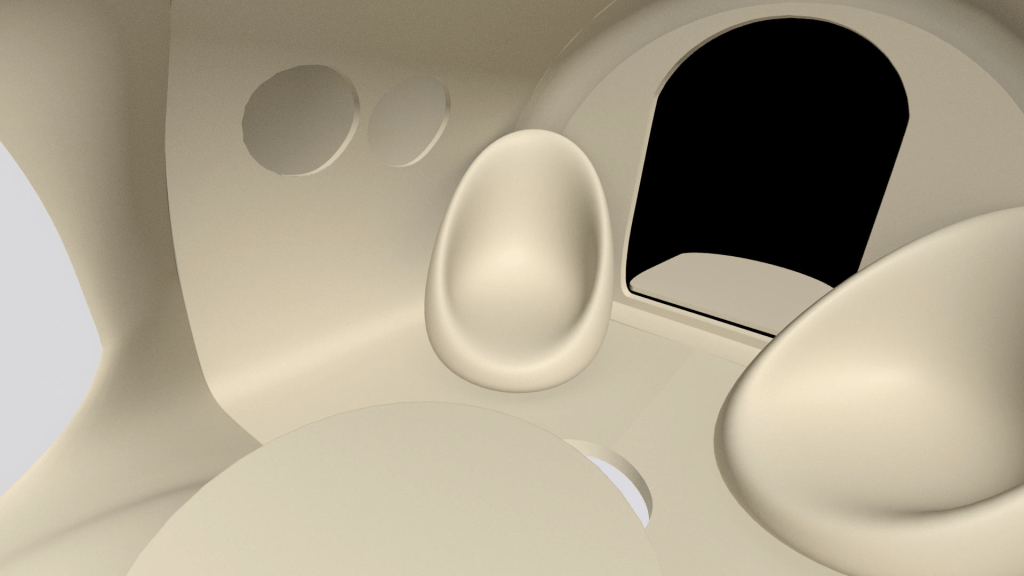
The pod itself went through a fair few iterations, many beautiful but impractical. In the end, I was called on to design the unit as, after discussion, we felt we had to lead with the tech we had available to use and work our way back from there as elegantly as we could.

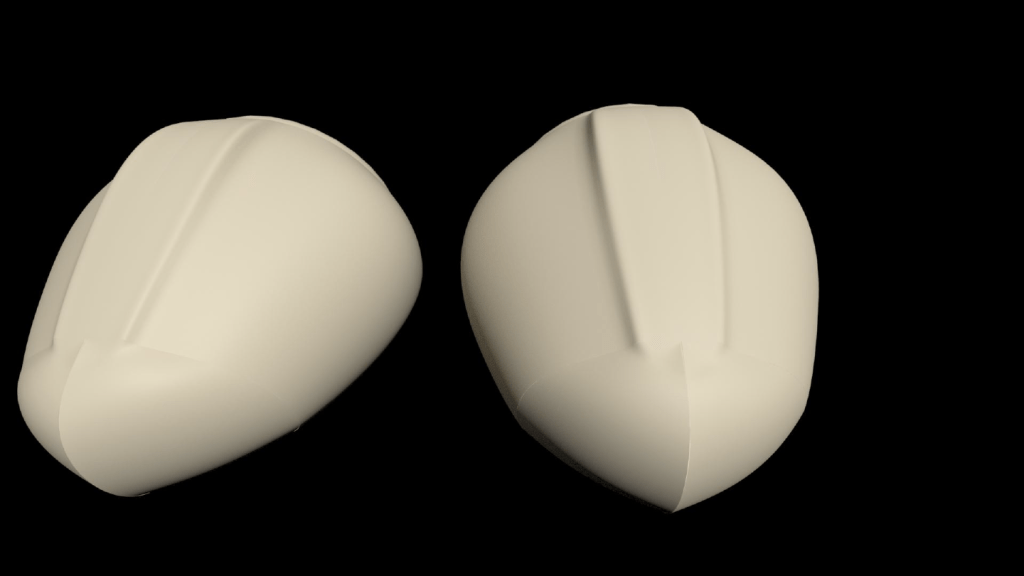
The ship was designed in 3DS Max, using NURBS, just for a change.
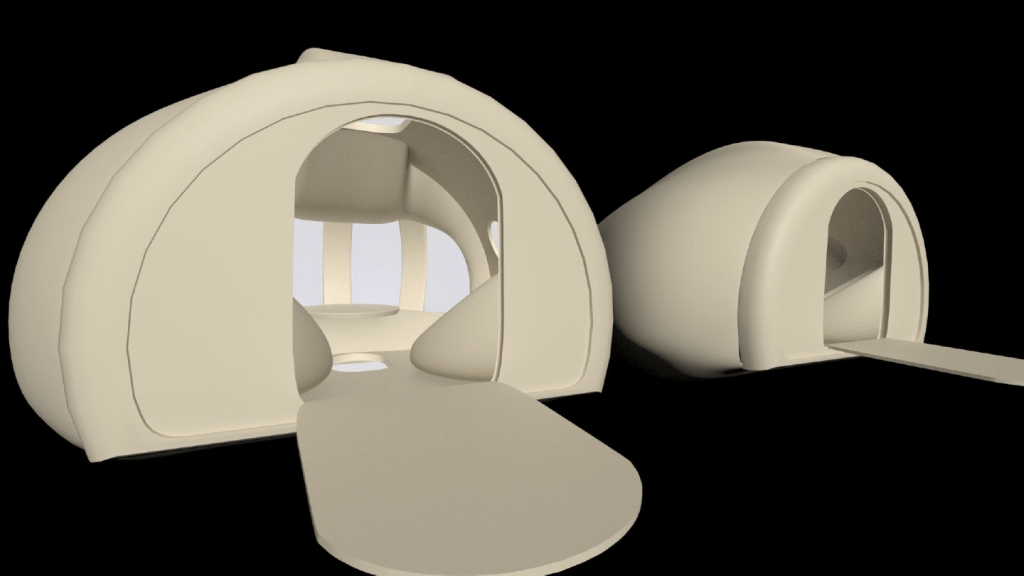
A number of screen configurations were considered, and the housing designed around them.
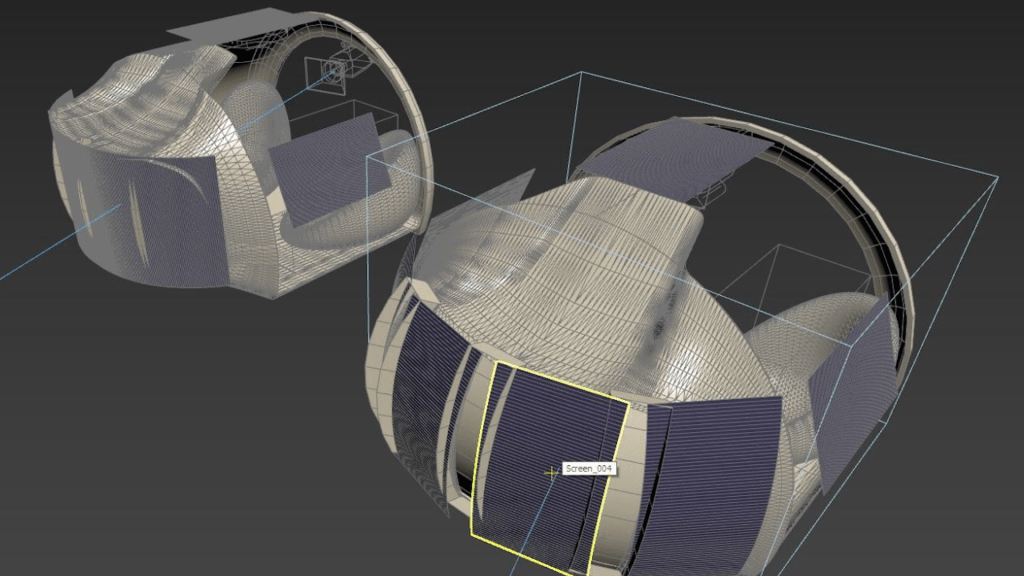
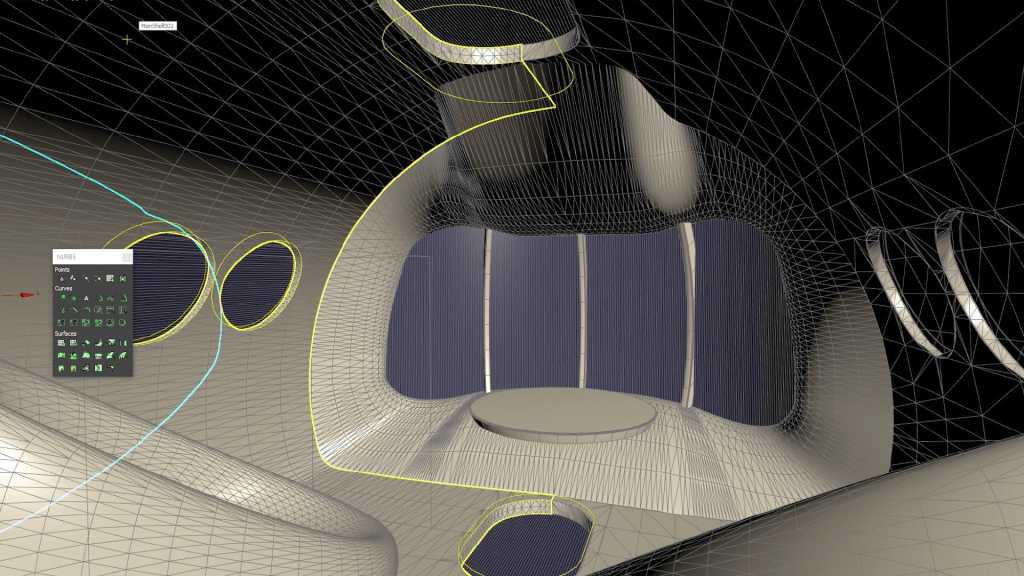
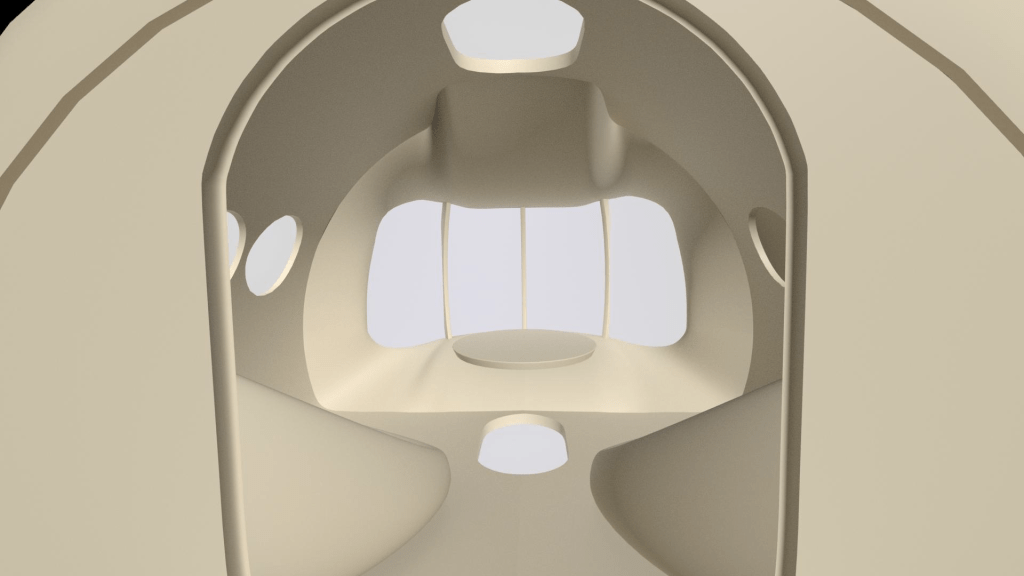
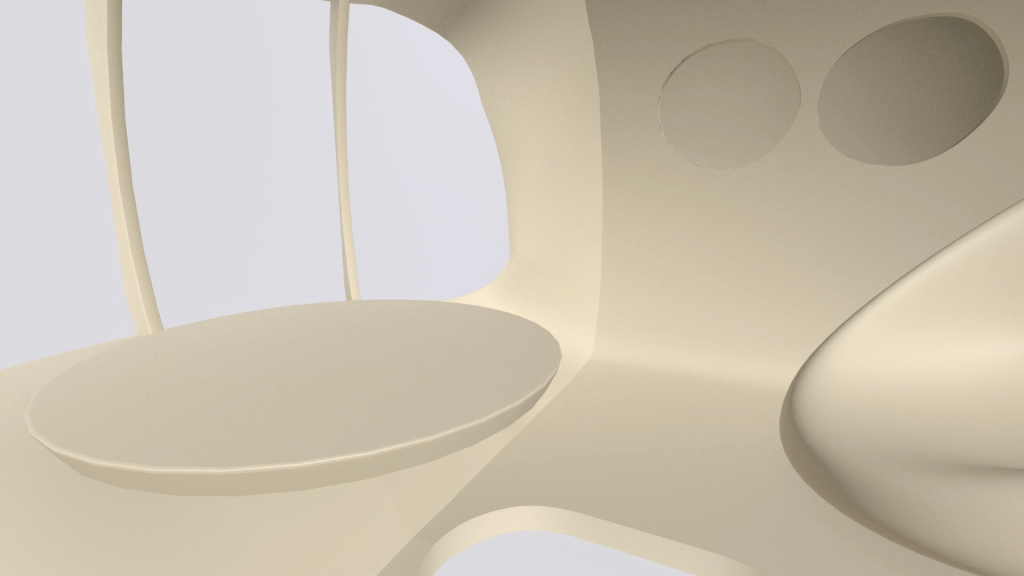
Obviously, the seating was replaced by motion-feedback chairs
Finally, here’s the sales video
And here’s a longer, “making-of” video
 Jon Taylor Artwork